
California’s SB 415 (formerly AB 98) reshapes how logistics and warehouse developments are planned and designed near sensitive receptors, setting a new statewide baseline for smarter, more responsible industrial development. Effective January 1, 2026, the legislation introduces requirements for site planning, buffering, truck circulation, and building performance, with standards that vary by project size, zoning, and proximity to surrounding uses. Many projects will also be required to meet the new “21st Century” or “Tier 1 21st Century” logistics facility criteria, raising expectations for energy performance, electrification readiness, and long-term operational sustainability.
To help our clients move forward with confidence, we created this summary chart as a practical, early-stage planning tool. The chart translates the complex regulatory framework into an easy-to-read, side-by-side comparison, highlighting the design considerations that most directly influence site feasibility, entitlement risk, and site plan design. Our team uses this tool to identify constraints early, unlock design opportunities, and deliver clear, buildable solutions tailored to each site and project goal.
Share this post
Related Posts
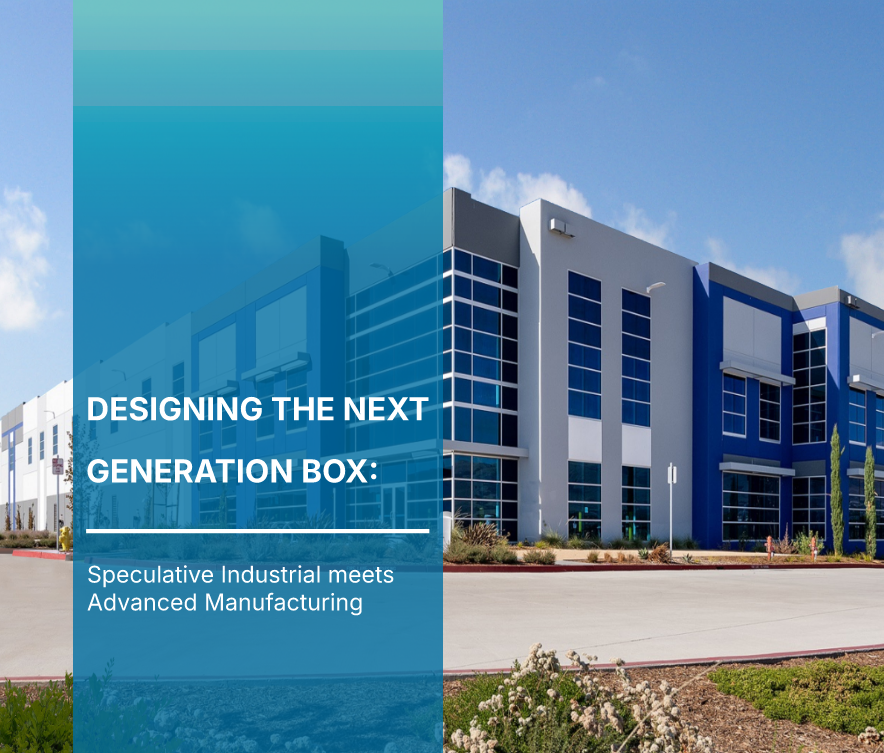
Designing the Next Generation Box – Advanced Manufacturing
Advanced manufacturing introduces different variables than traditional logistics users: higher workforce densities, elevated electrical requirements, and equipment-intensive layouts. In certain markets, the competitive advantage in speculative development is no longer maximizing the box to yesterday’s standard specs. It is calibrating the next generation of shell to responsibly serve both warehouse/distribution and advanced manufacturing users. In this white paper, we outline our design-led framework for advanced manufacturing ready speculative buildings.
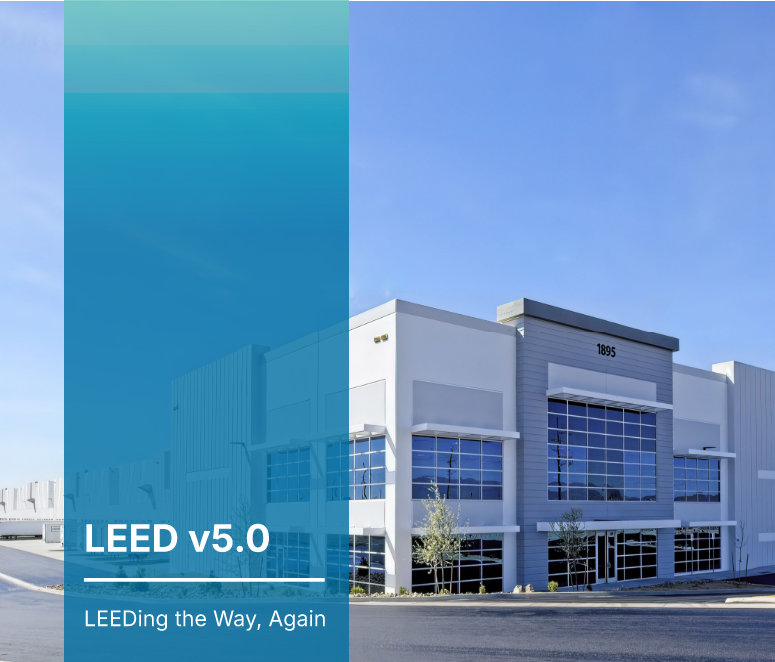
LEED v5.0 Is Here: The Next Evolution in Sustainable Design
The USGBC has officially approved LEED v5.0, marking a significant step forward in how sustainability is defined, measured, and achieved in the built environment. Centered on three core priorities: decarbonization, quality of life, and ecological conservation and restoration. In this technical memo, we outline what’s new in LEED v5.0, how the framework has been reorganized, and what project teams should know about the transition timeline as LEED v4.1 and v5.0 run concurrently.
Project registration for LEED v4.1 will close on June 30, 2026. We recommend registering projects that are scheduled to kick off next year before this date.
Navigating the CBSCS 2025 code change
Our team has reviewed the 2025 California Building Code (CBC) updates, which will become effective on January 1, 2026. Below is a high-level summary of the relevant changes for industrial buildings:
- Seismic forces go up by 15% to 20%
- Increased emergency egress illumination requirements
- Increased guardrail requirements at retaining walls
- Long term required bicycle parking requirements are doubled
- EV chargers requirements are doubled
- Case by case:
- More solar, battery storage, and updated photovoltaics & battery energy storage standards
- Increased requirements for indoor and outdoor storage of lithium-ion / lithium metal batteries and energy storage systems
- More stringent wildfire and wildland interface provisions
For more information see our detailed code update.
We are tracking the code adoption schedule for our other major markets as well. For more information contact us at info@hparchs.com to discuss the code changes that apply to your project.